
 Costa del Sol Invest
  CostaSecret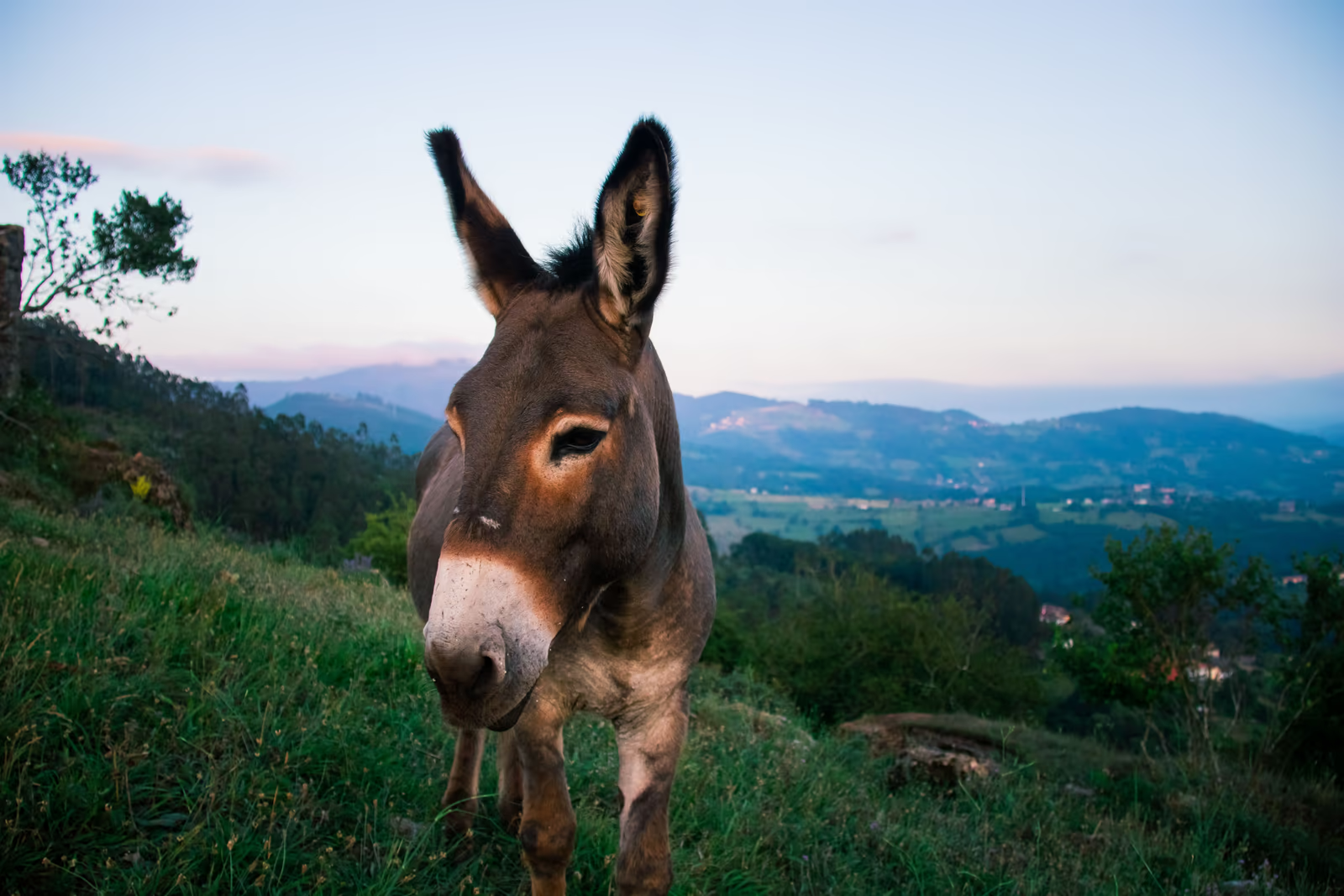
The symbol of Mijas Pueblo
When people think of Mijas Pueblo, they often picture the donkey taxis: donkeys and donkey carts carrying tourists through the white streets. They usually wait at the Plaza Virgen de la Peña and have been the village's landmark for decades, seen on countless postcards.
Whether or not you ride one, the phenomenon is inseparable from the village's identity. Read also our guide on things to do in Mijas Pueblo.
How it began
The story goes back to the 1960s, the start of tourism on the Costa del Sol. Farmers returned from the fields on their donkeys, and visitors wanted a photo with them. What began as spontaneous snapshots grew into a fixed attraction: the burro-taxi. It became a way for local families to earn something from the emerging tourism.
So the humble working donkey became the unexpected face of a white mountain village, a piece of living history of how Mijas shifted from farming to tourism. More on that in our history of Mijas.
The animal-welfare debate
In recent years the burro-taxi has come under scrutiny. Animal-welfare organisations have raised concerns about things like heat, the weight the animals carry, shade, water and rest. Partly because of this, rules and checks have been introduced to improve conditions, and it remains a subject of debate.
We think it is fair to name this rather than gloss over it. Whether you choose to ride is a personal judgement; at least know that the debate exists and that there are good alternatives.
Alternatives we recommend
The good news: you do not need the donkey to experience Mijas Pueblo. The village is compact and easily done on foot, and walking is exactly how you discover the prettiest streets and viewpoints. If you would rather not walk it all because of the slopes, there are also horse-drawn carriages.
Our personal recommendation is simple: wear good shoes, take your time and wander on foot. You miss nothing, and you often enjoy it more. See our one-day Mijas Pueblo route.
Practical
The donkey taxis are based centrally at the Plaza Virgen de la Peña. Prices vary by ride or loop; ask the fare in advance if you do want to go. The village itself is free to visit and everything is within walking distance.
Whatever you choose, come early or late in the day for the fewest crowds and the least heat, which is most pleasant for you and for any animals.
Frequently asked questions
The burro-taxis are donkeys and donkey carts that carry tourists through Mijas Pueblo. They wait at the Plaza Virgen de la Peña and have been the village's symbol for decades.
In the 1960s farmers returned from the fields on their donkeys; tourists wanted a photo with them. That grew into a fixed attraction and a source of income.
Yes. Animal-welfare organisations have raised concerns about heat, weight, shade and rest. Rules have been introduced to improve conditions, but it remains a subject of debate.
Mijas Pueblo is compact and easily explored on foot, which also reveals the prettiest streets. There are also horse-drawn carriages. We recommend simply walking.
No. The village is small and walkable; all the sights are within walking distance. The donkey taxi is a choice, not a necessity.