
 Costa del Sol Invest
  CostaSecret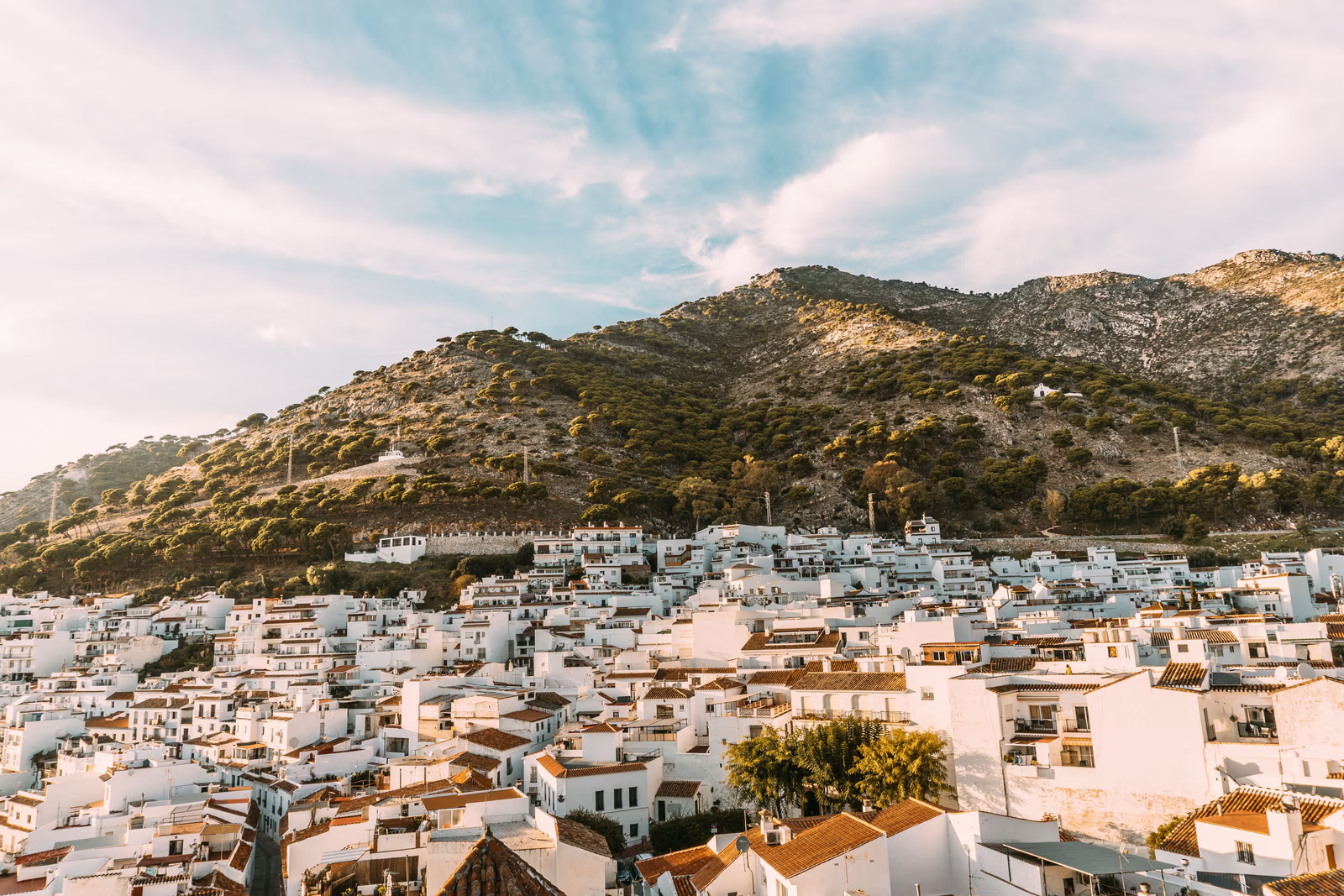
Prehistory & Roman era
The earliest traces of human habitation in the Mijas area date back to the Neolithic period, more than 4,000 years ago. Cave paintings and stone tools found in the Sierra de Mijas caves point to a community of hunter-gatherers. Later, Iberian tribes settled on the strategically located hilltops, where they built fortified settlements (oppida) overlooking the coast and the fertile valleys below.
With the arrival of the Romans around 200 BC, the area was incorporated into the province of Hispania Baetica. The Romans built villas, roads and aqueducts that greatly improved agriculture. Remains of Roman ceramics and coins have been found in present-day Mijas Pueblo and along the coast. The Romans also introduced olive cultivation and viticulture that continue to characterise the Costa del Sol landscape to this day.
The Moorish period (711–1487)
In 711, the Moors conquered the Iberian Peninsula and Mijas became part of the Caliphate of Cordoba, later the Taifa kingdom of Malaga. The Moors named the village 'Mixa' and built a fortified castle (alcazaba) on the hilltop. Under Moorish rule, Mijas flourished as an agricultural centre: the Moors introduced advanced irrigation systems, terracing and new crops such as citrus fruits, almonds and sugar cane.
Moorish influence remains visible today in the layout of the village, with its labyrinth of narrow streets and whitewashed houses with interior courtyards (patios). The muralhas (town walls) and the remains of the Moorish tower above the village are reminders of nearly eight centuries of Islamic governance. The Arab bathhouse discovered in the 1970s confirms the sophistication of daily life in Moorish Mijas.
The Reconquista & Christian conquest
On 15 June 1487, Mijas fell to the forces of Ferdinand and Isabella as part of the Reconquista of the Kingdom of Granada. The conquest was hard-fought: Moorish inhabitants barricaded themselves in the castle and caves of the Sierra de Mijas before surrendering. After the surrender, many Muslims were forced to convert to Christianity or leave the area entirely.
The Christian rulers rebuilt Mijas as a typical Andalusian village. The mosque was converted into the Church of the Inmaculada Concepcion, which remains the heart of the village today. The Ermita de la Virgen de la Pena, built within a natural cave above the village, became an important pilgrimage site. In the centuries following the Reconquista, Mijas remained a modest farming community dependent on olives, wine and goats.
18th & 19th century: agriculture & isolation
During the 18th and 19th centuries, Mijas was an isolated mountain village that subsisted on agriculture, livestock and the production of lime and esparto (a plant fibre). The population hovered around 5,000 inhabitants. The village was poorly accessible, the only connection to the coast ran via mule tracks across the mountain ridge. This remoteness meant that Mijas retained its traditional character while the coastal towns were already modernising.
The 19th century also brought periods of turmoil. During the Napoleonic Wars (1808–1814), villagers suffered looting by French troops. Later in the century, the phylloxera plague destroyed the vineyards, dealing a severe economic blow. Many families emigrated to South America in search of a better life, a trend that continued well into the 20th century.
The Spanish Civil War (1936–1939)
The Spanish Civil War hit Mijas hard. The village lay in Republican territory and became a refuge for people fleeing Malaga. In February 1937, during the fall of Malaga, thousands of civilians fled along the coastal road towards Almeria, a tragic event known as 'La Desbanda'. Many residents of Mijas were caught up in this drama, either as victims or as helpers of the refugees.
After Franco's victory in 1939, a period of repression and poverty followed. Opponents of the regime were persecuted and imprisoned. The economy collapsed and many families survived on subsistence farming. The stories from this dark period are preserved in the Museo Historico-Etnologico in Mijas Pueblo, where personal testimonies and historical photographs paint a compelling picture of the suffering endured.
Tourism boom from the 1960s
The great turning point for Mijas came in the 1960s, when the Costa del Sol was discovered by Northern European tourists. The Spanish government promoted the construction of hotels and infrastructure along the coast, and Mijas Costa developed rapidly from an untouched coastal area into a modern holiday region. Urbanisations such as Calahonda, Riviera del Sol and La Cala de Mijas sprang up in the 1970s and 1980s, attracted by foreign investors and retirees.
Mijas Pueblo benefited from the tourist influx. The picturesque mountain village became one of the most visited white villages in Andalusia, famous for its donkey taxis, panoramic views and artisan shops. The combination of coast and mountains, of beach and tradition, made Mijas a unique destination. By the end of the 20th century, tourism had become the main economic engine of the municipality.
Modern Mijas: growth & diversity
Today, the municipality of Mijas has more than 90,000 inhabitants, of whom approximately 30% are of foreign origin. British, Scandinavian, Dutch, German and Irish communities form significant populations, making Mijas one of the most multicultural municipalities in Spain. The municipality comprises three centres: Mijas Pueblo (the mountain village), Mijas Costa (the coast) and Las Lagunas (the modern urban district).
The economy has diversified with tourism, real estate, hospitality, golf and a growing digital sector. New developments combine modern comfort with Andalusian architecture, and sustainable building practices are gaining ground. The municipality is investing heavily in infrastructure, with improved roads, an extensive cycle path network and the redevelopment of the coastal promenade. Mijas looks to the future without losing its historic character.
Cultural heritage & traditions
The cultural heritage of Mijas is anchored in annual festivals and traditions that bridge generations. The Feria de Mijas in September is the highlight of the social calendar, featuring flamenco, horse shows, casetas (festival tents) and fireworks. Semana Santa (Holy Week) is celebrated with impressive processions through the narrow streets of the Pueblo, where religious statues are carried on ornate thrones.
Mijas also cherishes its artisan traditions. The ceramic workshops, esparto weavers and painters in the Pueblo keep centuries-old techniques alive. The Centro de Arte Contemporaneo in the village houses a surprising collection of Picasso works and modern art. The combination of living heritage and contemporary culture makes Mijas more than an ordinary tourist destination, it is a place where past and present merge seamlessly.
Frequently asked questions
The first human habitation in the Mijas area dates back more than 4,000 years. The current village of Mijas Pueblo has its roots in the Moorish period (711–1487) and was rebuilt as a Christian village after the Reconquista.
The Moors ruled Mijas for nearly 800 years and left a lasting imprint: the labyrinth of narrow streets, whitewashed houses, irrigation systems, the castle remains and an Arab bathhouse discovered in the 1970s.
Yes, Mijas Pueblo offers the Museo Historico-Etnologico, the Ermita de la Virgen de la Pena, remains of the Moorish walls, the Church of the Inmaculada Concepcion and the Centro de Arte Contemporaneo. All are within walking distance in the centre.
The donkey taxis originated in the 1960s when tourists discovered the mountain village. Originally, donkeys were the main mode of transport in the mountainous terrain. Today, the burro-taxis are a tourist symbol, though strict animal welfare regulations now apply.
Since the 1960s, tourism transformed Mijas from a poor, isolated mountain village into a prosperous, multicultural municipality with over 90,000 inhabitants. The coast was developed with urbanisations and golf courses, while the Pueblo preserved its historic character.