
 Costa del Sol Invest
  CostaSecret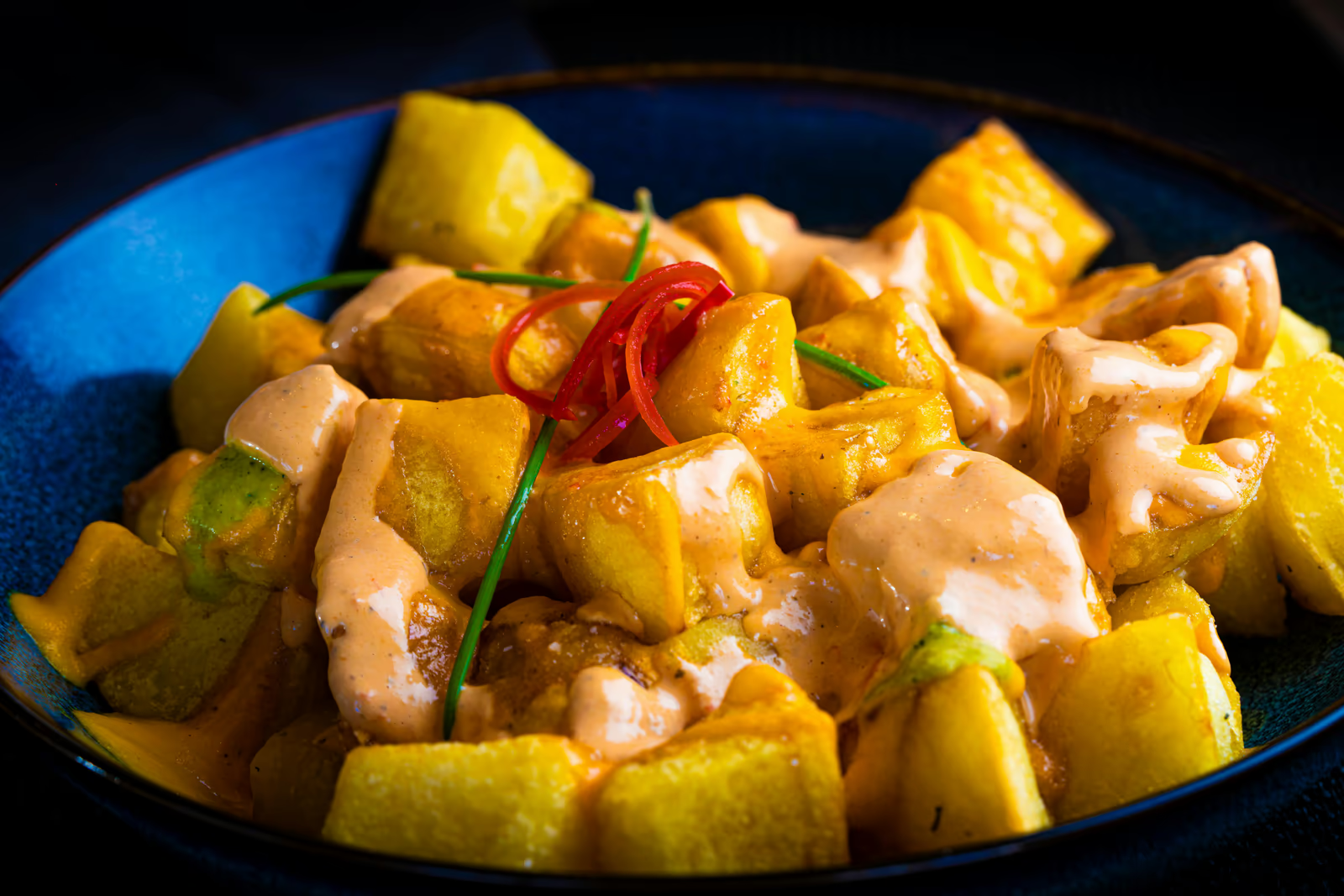
Andalusian cuisine: flavours of the south
Andalusian cuisine is one of Spain's richest regional traditions, shaped by centuries of Moorish, Roman and Mediterranean influences. Olive oil forms the base of virtually every dish, complemented by garlic, cumin, paprika and fresh herbs. The cooking is honest and seasonal: summer brings cold soups like gazpacho and salmorejo, while winter revolves around stews, grilled meats and hearty dishes like puchero andaluz.
Typical regional dishes you'll encounter in Mijas Costa include pescaíto frito (crispy fried small fish), tortilla de camarones (shrimp fritter), berenjenas con miel (aubergine with honey) and the ever-present jamón ibérico. The secret of Andalusian cuisine lies in the quality of the ingredients: fresh fish straight from the Mediterranean, olives from the hills of Jaén, and vegetables from the fertile vega of Málaga.
Chiringuitos & beach bars: espetos by the sea
No visit to Mijas Costa is complete without an afternoon at a chiringuito, the iconic beach bars synonymous with the Costa del Sol. The absolute highlight is the espeto de sardinas: six to eight sardines on a reed skewer, roasted at an angle in the sand beside a wood fire. This method dates back to the 19th century and was declared Cultural Heritage of Málaga in 2006. The best espetos are ordered from June to October, when the sardines are at their fattest and tastiest.
Along the coast of Mijas Costa you'll find excellent chiringuitos at Playa de La Cala, El Chaparral and Calahonda. Chiringuito La Boca is loved for its grilled fish and relaxed atmosphere, while El Olivo on the beach serves fresh seafood with your feet in the sand. Alongside espetos, order a fritura malagueña (mixed fried fish) or prawns from the plancha, accompanied by an ice-cold beer or a tinto de verano, red wine with lemon soda, the ultimate Spanish summer drink.
Restaurants in La Cala de Mijas
La Cala de Mijas is the culinary heart of the area, with a surprisingly diverse offering for a coastal town of this size. Along the promenade and in the narrow streets around Plaza de la Constitución you'll find dozens of restaurants ranging from traditional Spanish to international. El Jinete is an institution renowned for decades for its grilled meat and fish dishes. Valeria's offers modern Mediterranean cuisine in a stylish setting, and La Laja combines fresh fish with spectacular views over the bay.
For an authentic experience, visit the tapas bars in the side streets behind the promenade, where locals and visitors stand side by side. La Galería impresses with creative tapas and an excellent wine list, while Restaurante El Ranchito is beloved for its wood-fired paella. On weekends it's wise to book ahead, especially during the high season from June to September. Many restaurants offer an affordable menú del día between 12:00 and 16:00, a three-course lunch including bread and a drink for €12 to €18.
Tapas culture: how to eat like a local
Eating tapas in Andalusia isn't a meal, it's a social event. The tradition dates back to the 13th century, when King Alfonso X decreed that a small bite must be served with every glass of wine. In many bars around Mijas Costa you'll still receive a free tapa with your drink, an olive, a piece of cheese or a slice of chorizo. The art is not to stay too long in one place: true Andalusians do a tapeo, a tour of several bars, sharing one or two tapas at each stop.
Start your tapeo around 13:30 for lunch or 20:30 for dinner, eating earlier is for tourists. Order two to three tapas per person and share everything at the table. Classics you shouldn't miss: gambas al ajillo (garlic prawns), croquetas de jamón (ham croquettes), ensaladilla rusa (Spanish potato salad), patatas bravas and boquerones en vinagre (anchovies in vinegar). When in doubt, ask the waiter for the especialidad de la casa, the house speciality is rarely a disappointment.
Local markets: fresh from land and sea
The weekly markets are a colourful highlight of life on the Costa del Sol and the best place to experience local food culture. The La Cala de Mijas market takes place every Wednesday along the promenade and offers a mix of fresh vegetables and fruit, olives, cheese, cured meats, honey and pastries alongside clothing and household goods. Arrive early, the best produce is sold out by 11:00. The Tuesday market in Fuengirola at the Recinto Ferial is one of the largest on the coast, with hundreds of stalls.
For daily-fresh produce, visit the Mercado Municipal in Fuengirola, a covered market hall where local fishermen, butchers and greengrocers sell their wares. Here you can buy fresh dorada, lubina or prawns caught that very morning. The Saturday market in Fuengirola by the harbour is particularly atmospheric and also offers artisan products and street food. Don't forget to take home local specialities as souvenirs: a bottle of extra virgin olive oil from the Montes de Málaga, a jar of almond honey or a wedge of cured goat's cheese.
Málaga wine region: from Moscatel to Sierras
The Málaga wine region is one of Europe's oldest, with a winemaking tradition dating back to the Phoenicians. The region has two protected designations of origin: D.O. Málaga for fortified and sweet wines, and D.O. Sierras de Málaga for dry wines. The most famous grape is Moscatel de Alejandría, which forms the base of the honey-sweet Málaga wine beloved across Europe for centuries. But the region increasingly surprises with elegant dry whites and reds from small mountain bodegas.
From Mijas Costa, several wineries are reachable within an hour. Bodega Bentomiz in Sayalonga and Bodegas Dimobe in Moclinejo offer tours and tastings. In coastal restaurants, ask for vino de la tierra: local wines are excellent and affordable. A glass of sweet Moscatel with dessert is the perfect end to an Andalusian meal. For a special experience, explore the Ruta del Vino (wine route) through the Axarquía, a landscape of steep terraces with grape vines and almond trees.
Fine dining on the Costa del Sol
The Costa del Sol has undergone a culinary renaissance in recent years, with an increasing number of restaurants earning Michelin stars or recommendations. Skina in Marbella, the region's first two-star restaurant, serves avant-garde Andalusian dishes with local ingredients in an intimate 16th-century building. Dani García, the famous chef from Marbella, runs multiple concepts including Smoked Room (two stars) in Madrid and BiBo on the coast.
Closer to Mijas Costa, you'll find El Lago in Marbella (Michelin star) with its innovative Mediterranean cuisine by a lake, and Messina in Marbella for refined Italian-Andalusian fusion. For a special evening without the drive to Marbella, restaurants such as Mijas Playa Club and Tamisa Golf Hotel offer excellent tasting menus with sea views. Book at least a week ahead, especially during high season. The value for money of fine dining on the Costa del Sol is remarkably good compared to other European coastal areas.
Breakfast & brunch: starting the day right
The traditional Spanish breakfast is simple: a tostada con tomate (toasted bread with grated tomato and olive oil) and a café con leche. In Mijas Costa you'll find both this authentic breakfast and more extensive international options. Cafetería La Plaza in La Cala serves an excellent Spanish breakfast with churros, while The Terrace is a popular brunch spot offering eggs Benedict, pancakes and fresh smoothies. Paddy's Point serves a hearty full English breakfast for those who prefer it.
A special Andalusian tradition is the mollete: a soft, flat bread roll from Antequera served warm with olive oil and jamón serrano, available in virtually every bakery and bar. The best coffee can be found at speciality cafés like Buenavista Coffee in La Cala, which works with freshly roasted Colombian beans. On Sundays, brunch is a popular ritual: many restaurants along the promenade serve extensive brunch buffets from 11:00 to 15:00, ideal for rounding off the week with a glass of cava or mimosa in hand.
Frequently asked questions
Spaniards have lunch between 14:00 and 16:00 and dinner from 21:00 onwards. Many restaurants don't open for dinner until 20:00. In tourist areas you can eat earlier, but for the most authentic atmosphere, eat on Spanish time.
While Andalusian cuisine is meat- and fish-focused, more restaurants now offer vegetarian and vegan options. Salmorejo, gazpacho, pimientos de padrón and tortilla de patatas are naturally vegetarian. Ask for the carta de verduras or vegetarian menu.
A menú del día (three-course lunch) costs €12-18. Dinner with a starter, main course and drink comes to €25-40 per person. Tapas cost €3-8 per portion. Fine dining starts at around €60 per person excluding wine.
During high season (June-September), booking for dinner is strongly recommended, especially at popular restaurants in La Cala. For lunch and outside peak season, you can usually walk in without a reservation.
The best espetos are found at chiringuitos along the beaches of La Cala and El Chaparral. The season runs from June to October. Look for the wood fire and reed skewers, those are the signs of an authentic preparation.
The best Mijas restaurants vary by spot: on the coast in La Cala de Mijas you eat fresh fish and espeto at the chiringuitos, and in Mijas Pueblo you dine with a panoramic view. See our separate guides to restaurants in La Cala and in Mijas Pueblo.