
 Costa del Sol Invest
  CostaSecret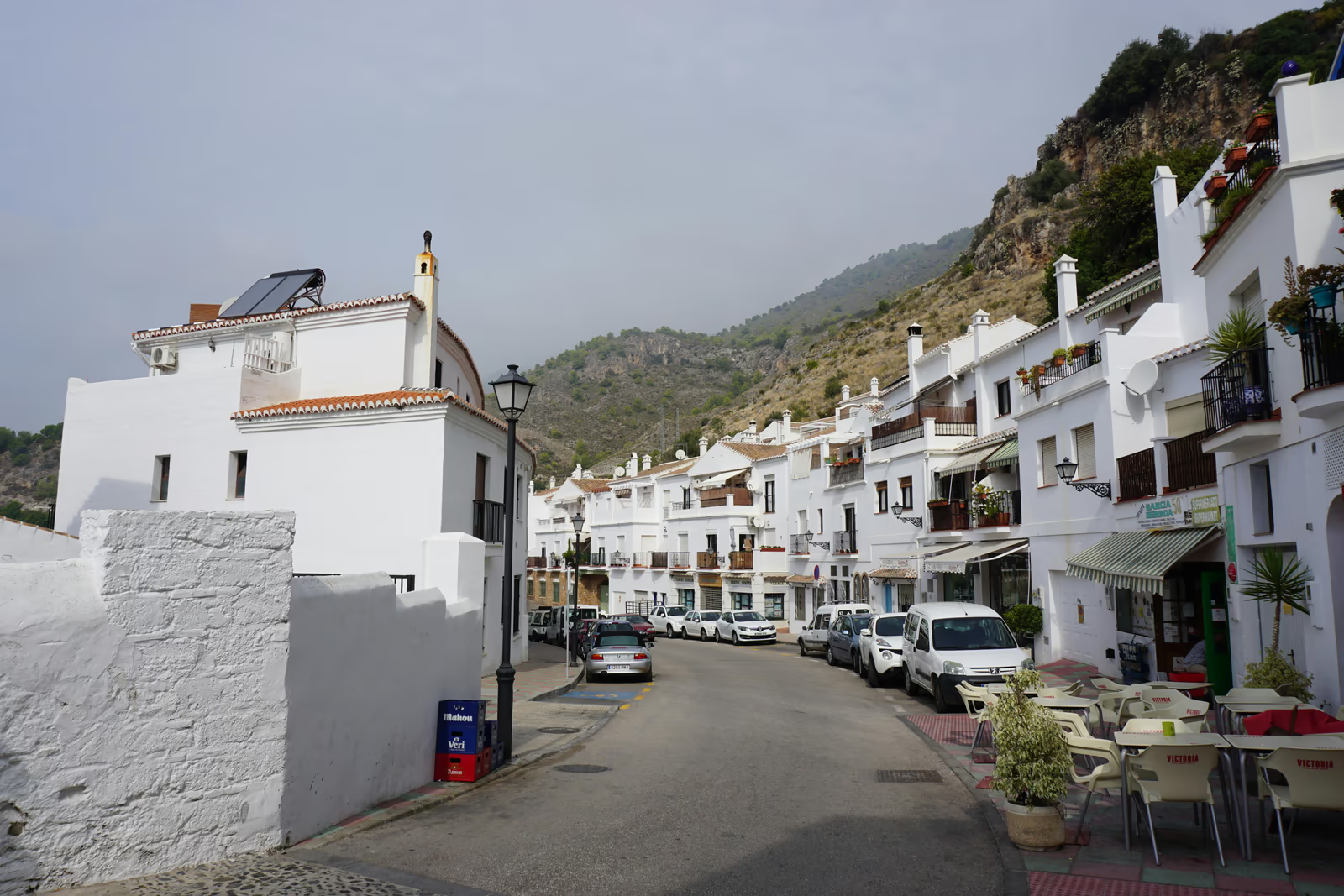
What and where is Mijas Pueblo?
Mijas Pueblo is a historic white village (pueblo blanco) in the province of Málaga, Andalusia, perched at about 428 metres on the southern slope of the Sierra de Mijas. It is the old hilltop heart of the municipality of Mijas, above the coastal strip of Mijas Costa and the beach town of La Cala de Mijas, where we are based. Wondering how the village and the coast differ? See Mijas Pueblo vs Mijas Costa.
It is best known for its steep whitewashed lanes, the famous donkey taxis, hilltop miradores with views that on a clear day reach the African coast, and a chapel carved into the rock. From La Cala and Coral Mijas Stay it is about a fifteen-minute drive uphill. Here is how to make the most of it.
History and location
Mijas has looked out over the sea for a very long time. There were Phoenicians and Romans, but it is the Moors who left the biggest mark with a fortified settlement; parts of their walls still stand. After the Reconquista in 1487 the village was rebuilt in the whitewashed style you see today. For the full story, read our history of Mijas.
That position at 428 metres was once protection against pirates and is now a happy bonus: it is a few degrees cooler here than on the beach, ideal when the coast bakes in summer. Do not confuse the village with the coast or the municipality as a whole; we explain the difference in Mijas Pueblo versus Mijas Costa.
Wandering the white streets
The best thing to do in Mijas Pueblo is actually free: get lost. The centre is a tangle of steep, whitewashed streets with flower pots full of geraniums, and almost every corner gives a new view of sea or mountains. Start on the Plaza de la Constitución with its terraces, then wander on without a map.
Our tip: leave the main route. Calle San Sebastián is the most photographed lane, but the quietest, prettiest corners are in the side streets where the tour groups do not go. A full loop of the highlights is in our guide things to do in Mijas Pueblo.
The donkey taxis
No image is as tied to Mijas as the donkey taxis. They started in the 1960s, when farmers came back from the fields on their donkeys and tourists wanted a photo. There is now an animal-welfare debate too, and we do not gloss over it.
Whether you ride is a personal call; we mainly think you should know the story. We wrote an honest, separate guide about it, with the history, the discussion and the alternatives: the donkey taxis of Mijas.
Museums, churches and a chapel in the rock
For such a small village there is surprisingly much culture. The Centro de Arte Contemporáneo (CAC Mijas) surprised us with Picasso ceramics, and the ethnological museum shows how life here used to be. A real curiosity is the miniatures museum, with among other things the Last Supper painted on a grain of rice; tiny but astonishing.
The most atmospheric spot is the Ermita de la Virgen de la Peña, a chapel literally carved into the rock, dedicated to the village's patron saint. It is cool, quiet and intimate, a lovely place to step out of the sun with a view over the coast.
The viewpoints
In a village built against a slope, the miradores are the great gift. The best known is the Mirador del Compás, next to the Ermita, where photographers gather at sunset and the sea turns from gold to orange. On a clear day you see beyond the Strait of Gibraltar.
Walk along the old Moorish wall, the Muralla, too, for a quieter view with more history. The little path along the wall links the prettiest points; half an hour's stroll in the evening light is, to us, one of the nicest things on the whole coast.
Craft shops and galleries
Unlike the souvenir stands on the coast, here they often sell genuinely handmade work: painted ceramics, leather, silver jewellery and olive-wood carving, made by local craftspeople. It is one of the few places where a souvenir still has a story.
Step into the workshops around the Plaza de la Virgen even if you are not looking for anything; the makers love to tell you about it. And take something sweet from a dulcería, like polvorones or mantecados. For a lunch with a view alongside, see our guide to restaurants in Mijas Pueblo.
How you get there and where to park
By car you drive up from the coast (Fuengirola or La Cala de Mijas) in about 15 to 20 minutes via the A-387 mountain road. The easiest place to park is the underground car park on Avenida del Compás, right by the main entrance; from there you explore the car-free centre on foot. Parking in the narrow streets themselves is not an option. There is also a bus up from Fuengirola.
Wear good shoes for the slopes, and plan your day around the heat: come early or stay for the sunset. A worked-out plan is in our guide Mijas Pueblo in a day.
Fiestas and festivals
The village lives all year, but truly comes alive during its fiestas. In September the patron saint is honoured at the Feria de la Virgen de la Peña, with processions, music and sevillanas. The other Andalusian highlights, from Semana Santa to the summer ferias, are celebrated here with gusto too.
If your visit coincides with a feria, you see the village at its most authentic. More on the festivities on the coast in our guide to the Feria de La Cala.
Frequently asked questions
Yes. Mijas Pueblo is one of Andalusia's most scenic white villages: whitewashed streets, panoramic miradores over the Costa del Sol, the chapel in the rock, craft shops and the well-known donkey taxis, all about fifteen minutes uphill from the coast. It makes an easy and rewarding half-day trip from La Cala de Mijas.
Mijas Pueblo sits at about 428 metres above sea level, against the southern slope of the Sierra de Mijas. That makes it a few degrees cooler than the coast.
By car from Fuengirola or La Cala de Mijas in 15 to 20 minutes up via the A-387. There is also a bus from Fuengirola up to the village.
The easiest option is the underground car park on Avenida del Compás, by the main entrance. From there you explore the car-free centre on foot; parking in the streets themselves is not advised.
Wander the white streets, see the Ermita and the miradores, the CAC and ethnological museums, and the craft shops. See our separate guide 'things to do in Mijas Pueblo'.
You see the highlights in two to three hours, but with a lunch with a view and the museums you easily fill half a day to a full day.
There is a welfare debate about the donkey taxis, and rules have been introduced to improve conditions. Read our separate, honest guide on the donkey taxis of Mijas for the full story and the alternatives.