
 Costa del Sol Invest
  CostaSecret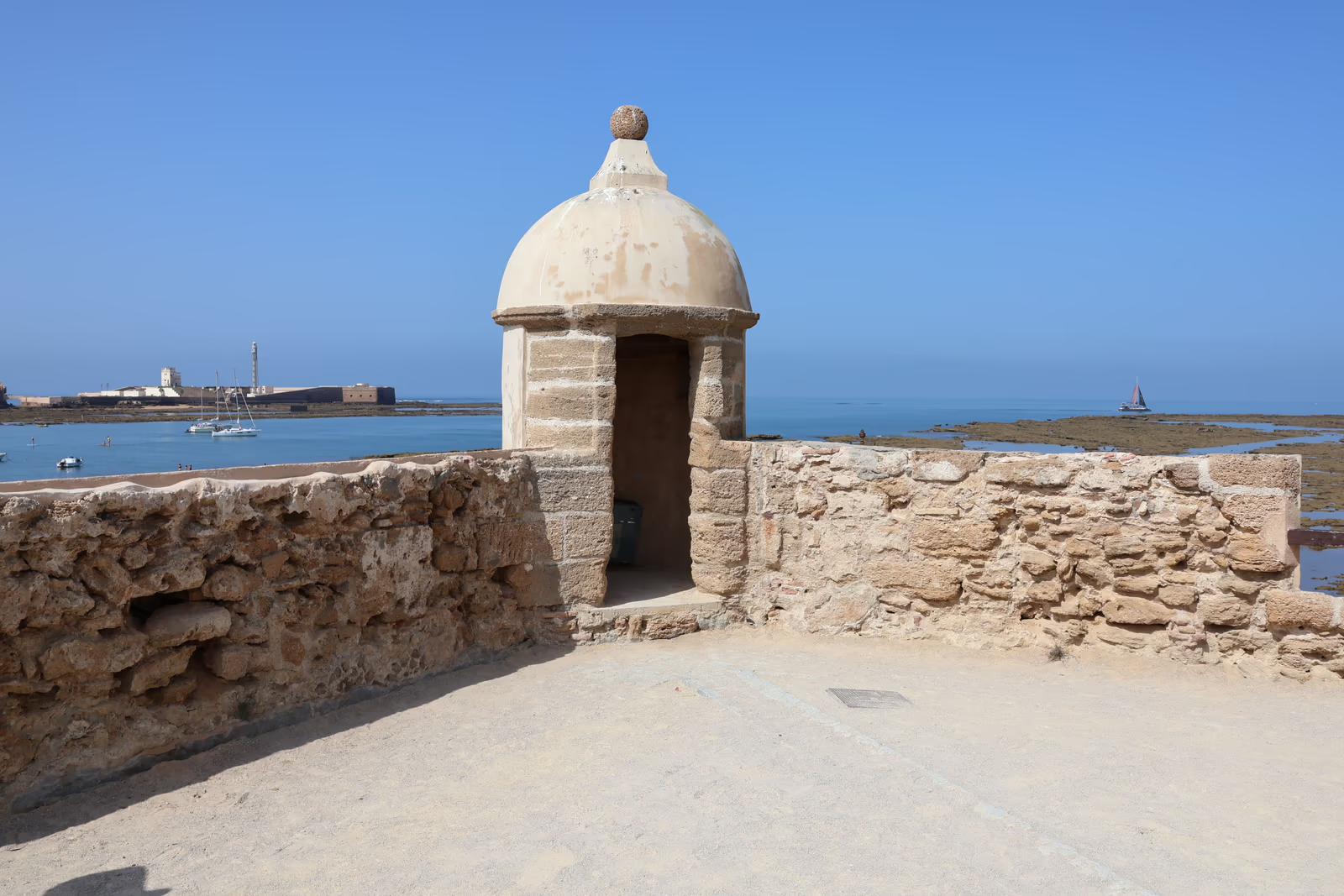
What does 'La Cala' mean and how did the village begin?
The Spanish word cala means cove or inlet, a sheltered spot where fishermen could pull their boats onto the beach. That is exactly what La Cala de Mijas was for centuries: a small, whitewashed settlement of fishermen and farmers belonging to the municipality of Mijas, whose old mountain village, Mijas Pueblo, sits high in the Sierra. While Mijas Pueblo retreated inland for safety, the coast remained sparsely populated and vulnerable.
The coastal plain was used for farming and fishing, but permanent settlement by the sea was risky for a long time. Only with the building of defensive towers and, much later, the arrival of tourism did La Cala grow into the lively village it is today. To explore the modern village, read our guide to the beach and village of La Cala de Mijas.
The watchtowers: defence against pirates (16th–18th century)
For centuries the greatest threat to this coast came from the sea: North African (Barbary) pirates raided villages, stole livestock and carried off inhabitants as slaves. To protect the coast, from the 16th century the Spanish Crown built a chain of watchtowers (torres vigía) along the entire Málaga coast. The towers of Mijas were part of this system, warning the garrisons of Fuengirola, Benalmádena and Marbella of approaching danger.
Several historic towers stand near La Cala. The Torre de Calaburras and the Torre de Calahonda were completed around 1575, and the Torre Nueva (also called 'Penta Peseta') dates from the 16th century. The towers used fire and smoke signals, smoke by day, fire by night, visible from tower to tower. Later they were armed with cannons and became genuine artillery posts. A full overview of the towers is available from the official Mijas tourism office.
The Torreón de La Cala and the Tower Museum
The best-known tower in the village is the Torreón de La Cala, also called the Torre de la Batería or the old tower of Cala del Moral, built in 1773. This sturdy 18th-century tower rises above the beach and has become the symbol of La Cala, in summer it forms the backdrop for evening concerts and festivities.
The tower has been carefully restored and now houses the Centro de Interpretación de las Torres Vigía (Watchtower Interpretation Centre), part of the Historical-Ethnological Museum of Mijas. Inside you can discover how the tower system worked, the fishing past of La Cala and the story of General Torrijos' landing. Admission is modest (around €2, free on Mondays) and opening hours vary by season, evenings in summer, daytime the rest of the year. Check current times via the Diputación de Málaga.
The landing of General Torrijos (1831)
One of the most dramatic events on this coast unfolded in December 1831. The liberal general José María de Torrijos landed with a small band of followers on the beaches of Mijas Costa, hoping to spark an uprising against the absolutist rule of King Ferdinand VII. It was a trap: betrayed and surrounded, Torrijos was captured.
Together with 48 companions he was executed without trial on 11 December 1831 on San Andrés beach in Málaga. The execution turned Torrijos into a martyr of the Spanish liberal movement, Antonio Gisbert's famous painting immortalised the scene and hangs in the Prado. La Cala's Tower Museum tells this piece of national history that played out literally off the village's shore.
Fishing heritage: jábega, traíña and the espeto
Until well into the twentieth century La Cala lived from the sea. Fishermen used traditional wooden boats such as the jábega (a flat-bottomed boat hauled onto the beach by hand), the traíña and the sardinal, each with its own nets and fishing technique. They set out at dawn; on their return the whole village pulled together on the nets, a community ritual that set the rhythm of the village for generations.
From this tradition comes the most famous dish of the Costa del Sol: the espeto de sardinas, sardines skewered on a cane and grilled over glowing wood on the beach, often in an old fishing boat filled with sand. You can still taste it today in the chiringuitos along the promenade. Read more about the local cuisine in our guide to food and dining in Mijas.
The tourism boom from the 1960s
The great turning point came with the Spanish tourism boom of the 1960s. In a short time the Costa del Sol changed from a poor coastal region into an international holiday destination. Where fishing nets once hung to dry, apartments, hotels and urbanisations rose. La Cala de Mijas grew with it but, unlike many neighbouring resorts, kept a recognisable village heart around the old tower.
From the 1980s and 1990s a large international community settled here, particularly Britons and Scandinavians, followed by Dutch, Belgian and German residents. Today La Cala de Mijas has around 10,000 inhabitants and is one of the most sought-after places to live and holiday on the coast, partly thanks to new developments such as Coral Mijas Residencial in neighbouring Riviera del Sol.
La Cala today: feria, coastal path and community
History lives on in the village's traditions. Every year from late July, La Cala celebrates its feria: a week of Andalusian music, dancing, sevillanas, tapas and local wine around the old tower, in honour of its patron saint. It is the moment when international and Spanish La Cala come together on one square.
In 2015 the seafront promenade was extended with a senda litoral, a wooden coastal boardwalk, part of the Málaga Coastal Path, running for kilometres along the sea. In this way the village connects its maritime past with a modern, walkable present. To understand the wider region and its history, you can also read our guide to the history of Mijas.
Timeline & visiting the Tower Museum
Quick timeline: 16th century, construction of the Calaburras, Calahonda and Torre Nueva watchtowers against pirates · 1773, construction of the Torreón de La Cala (today's museum tower) · 1831, landing and execution of General Torrijos · 1960s, start of the tourism boom · 2015, opening of the coastal boardwalk · today, around 10,000 inhabitants and an international community.
The Tower Museum (Centro de Interpretación de las Torres Vigía) sits right on the beach in the heart of the village, just minutes from Coral Mijas Stay. It makes an ideal short cultural stop during a beach day. Combine a visit with a stroll along the promenade and an espeto at a chiringuito to truly taste the village's past.
Frequently asked questions
La Cala has existed for centuries as a fishing and farming settlement. The oldest watchtowers date from the 16th century and the landmark Torreón de La Cala from 1773. As a tourist resort, the village grew only from the 1960s onwards.
'Cala' is Spanish for cove or inlet, a sheltered spot where fishermen pulled their boats onto the beach. 'De Mijas' refers to the municipality of Mijas, to which the village belongs.
Yes. The Torreón de La Cala houses the Centro de Interpretación de las Torres Vigía, part of the Mijas museum. Admission is around €2 (free on Mondays) and opening hours vary by season. Check current times in advance.
The towers were built from the 16th century to defend the coast against North African pirates. Using smoke and fire signals they warned the garrisons of Fuengirola, Benalmádena and Marbella; later they were armed with cannons.
José María de Torrijos was a Spanish liberal general who landed on the Mijas coast in December 1831 to rise up against King Ferdinand VII. He was betrayed, captured and executed in Málaga on 11 December 1831.
Tourism took off with the Spanish tourism boom of the 1960s, when the Costa del Sol became an international holiday destination. Since then La Cala has grown into a village of around 10,000 inhabitants.